

Treatment
Home > Treatment
Non Surgical Treatment of Rectal Prolapse
Ayurveda (Sanskrit Āyurveda आयुर्वेद, “life-knowledge”) or Ayurvedic treatment in India is an ancient Hindu medicine system derived from upaveda or commonly known as auxiliary knowledge in Vedic tradition. Medical practices adopted from this ayurvedic treatment offer alternative medicine to patients who want rectal prolapse treatment without surgery or other forms of treatment. Herbal medicines for Guda Bhransh ( Rectal Prolapse) are often preferred by individuals seeking holistic solutions that align with their body’s natural healing processes and lifestyle. Non surgical treatment has been more popular as the side effects of medicines are negligible and often patients are cured without undergoing the pain and trauma of operations. Non surgical treatment of rectal prolapse is the best treatment of prolapse rectum that inhibits no signs of post-treatment issues.
Ayurvedic treatment follows eight methods to cure different diseases. They are: Nadi (pulse), Mootra (urine), Mala (stool), Jihva (tongue), Shabda (speech), Sparsha (touch), Druk (vision), and Aakruti (appearance). Normally, practitioners following this medical stream offers cure by making use of the five senses.
Brief About Prolapsed Rectum
Rectal prolapse is defined as the slipping down of the rectum from its place through the anus. This ailment affects people of all ages, but it is common in elderly people and females.
- Types of Rectal Prolapse
- Complete (external) Prolapse: The all walls of the rectum bulges out through the anus.
- Mucosal Prolapse: Only the mucous membrane of the rectum bulges out.
- Internal Prolapse: The rectum is folded inside without protruding from the anus.
- Common Symptoms
- The presence of an unusual mass protruding from the anus
- Feeling like the bowels have not been completely emptied
- Constipation
- Fecal incontinence
- Discharge of mucus or blood
- Anal pressure
- Straining when having bowel movements
3. Common Causes and Risk Factors:
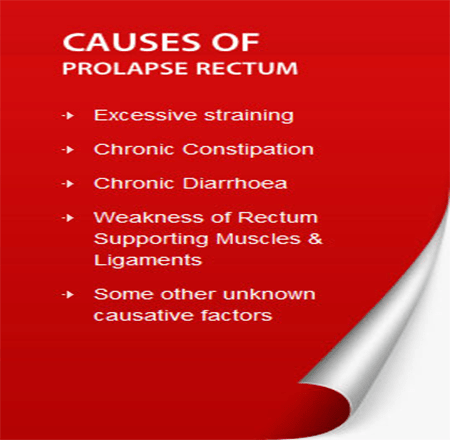
- Chronic constipation and straining
- Persistent diarrhea
- Weakened pelvic muscles
- Ageing process causing deterioration of supportive structures
- Pregnancy and delivery
- Prior surgeries of the pelvis or rectum
- Certain neurological or connective tissue diseases
- Increased abdominal pressure due to persistent coughing and lifting
To know more about Prolapsed Rectum: Click Here
Diagnosis of Rectal Prolapse
The diagnosis of rectal prolapse normally starts with a thorough physical exam and patient history taken by the physician. The physician will assess the symptoms, perform an examination of the perineal area and recommend further tests to be able to diagnose the condition, its severity and associated problems with bowel and pelvic floor.
- History: The patient will be asked about symptoms such as constipation, straining, fecal incontinence, bleeding, pain, as well as the duration and seriousness of the symptoms.
- Physical Exam: The doctor looks for any prolapse, swelling, irritation in the anal and rectal areas. The patient is asked to strain or bear down to facilitate the prolapse.
- Digital Rectal Exam: An examination using a gloved finger is done in order to determine the strength of the anal sphincter as well as the rectal tissues.
- Defecography: This test is used to evaluate the way in which the rectum and pelvic floor function while defecating. It helps in identifying any internal prolapse and other structural issues.
- Colonoscopy: When bleeding, change in bowel habits or some other disease needs to be ruled out, then a colonoscopy is carried out to check the colon and the rectum.
- Anorectal Manometry: An examination is conducted to measure the strength of the rectal and anal muscles.
What Grade of Rectal Prolapse this Treatment is Suitable For?
Rectal prolapse is categorised in four stages which is based on its severity of the tissue protrusion. Ayurvedic treatment always works best for Rectal Prolapse. Ayurvedic treatment has natural elements that can cure Prolapse Rectum without any side effects. It also stops the recurrence of the condition and improves the overall well-being. Here are the four stages of rectal prolapse:
- Grade I Internal Prolapse: This is the least severe form of prolapse where the rectum begins to fold or slip inwards but does not extend outwards through the anus. The individual feels an urge of incomplete defecation or a feeling of pressure and discomfort.
- Grade II Partial Prolapse: In this condition, part of the rectal mucosa extends from the anus in case of straining or passage of stools. This kind of prolapse needed Ayurvedic treatment to cure the condition before it got worse.
- Grade III Complete Prolapse: This involves a complete extension of the rectal wall outside the body. The prolapse becomes very obvious and the individual feels discomfort and slight pain during bowel movement..
- Grade IV Procidentia: This is the advanced form of rectal prolapse. In this stage, the intestinal tissue prolapses continuously and cannot maintain or be pushed back into its normal position.
Problems Because of Undergoing Surgery for Rectal Prolapse
Possible issues that a patient can face when he opts for the surgical rectal prolapse treatment comprise of :-
- Allergic effect to the anesthetics used during the surgery.
- Different kinds of infections.
- Hemorrhage.
- Damage caused to surrounded blood vessels or nerves.
- Injury to other pelvic organs, like rectum or bladder.
- Necrosis or commonly known as death of the rectal wall.
- Reappearance of the rectal prolapse.
Hence, opting for Rectal Prolapse treatment without surgery is advised for the suffering patients.
Benefits of Rectal Prolapse Treatment without Surgery:-
- Primarily, there is no surgery required to treat the disease.
- No side-effects of the medicine is observed during the treatment period
- The lowest risk rate and effective primitive health care option.
- Identifies and removes the basic causes of the diseases rather than superficial treatment or suppressing the symptoms.
- Motivate and educate patients for adopting healthy lifestyles.
- Diagnoses based on specific health factors and effects.
- No chance of reoccurrence in future.
- Ayurvedic Medicine for non surgical treatment is beneficial for good health of Pelvic floor muscles.
- Non Surgical treatment is also beneficial for erectile Dysfunction which has to face after surgery of rectum prolapse.
- Herbal Medicine is prepared according to patient diagnosis and his problems. Herbal Medicine is always prepared freshly. We do not commercialise it.
The benefits of our ayurvedic medicine is that patient has to take only single dose per day orally and the method of preparation is according to Age old traditional way as described in Ancient Ayurvedic literature. In preparation of herbal medicine, we do not use any mechanical or chemical process.
We adopt purely Ayurvedic procedures to prepare herbal medicine as Shodhan, Bhavana for removal of impurities and toxins to improve the potency of herbal medicine. We do not use any artificial preservative.
Role of Our Ayurvedic Medicine for Post Surgical Care
Our herbal treatment is suitable even post-surgery, this is because the herbs work in a natural way and maintain the normal physiology of pelvic organ. It helps in not only maintaining a good health of pelvic region but also keeps them in shape.
Our Ayurvedic Medicine strengthens and tones up the pelvic floor muscles, tissues, levator muscles (both sides) and the rectal – wall, reducing its congestion, bulk, bulging and relaxation.
Restore the Problem of Extensive Dissection of the Pelvic Region Like:
- Defecatory function problems
- Sexual problems
- Urological problems
- Incontinence
About Our Ayurvedic Treatment of Rectal Prolapse
Our treatment is not a single herb or a single formula, it is a structured healing modality based on Ayurvedic herbs principles and customized for individual patient.
In accordance with Ayurveda, rectal prolapse happens because of weakening of muscles, tissues and ligaments of the rectum, as well as an aggravation of the Vata dosha, which is a bodily principle providing movement and support. We use the following treatment modalities simultaneously:
- Balancing the internal imbalances that have caused this weakening of the tissue in the first place, instead of treating just the prolapse itself.
- Increasing the strength and tone of the pelvic floor muscles and rectal walls so that the organ stays in place.
- Repairing the damaged tissue in order to bring it back to its proper strength, elasticity and positioning.
- As we treat the cause and not the symptom, we achieve sustainable results, which is why the recurrence of our patients’ symptoms is none.
How our Ayurvedic Treatment Works
There are Ayurvedic Medicines for Prolapse rectum, in case one does not want to undergo surgery for this life-threatening condition :-
- The herbal medicine works on the principle of Ancient Ayurveda.
- It is a tested herbal medicine for Rectal Prolapse. (Procidentia).
- It is Researched & Developed after Clinical Trials of more then 42 Years.
- The herbal medicine for Rectal Prolapse produces natural adhesions between the mucosal and muscular layers of the Rectum .This property of Medicine binds and reduces and normalize the dilated and elongated Rectal wall and tissues and in turn helps lessen the congestion of rectal mass which will be later noticed by the patient post consuming the medicine for one month.
- Ayurvedic Medicine works to strengthen the support system of Rectum which becomes stretched , is elongated & hence loses its elasticity & fail to draw it again .The herbal medicine for Prolapse Rectum consists of the following ingredients GRAHI (Ayurvedic Terminology) in nature which means to replace the displaced organ.
- Herbal Medicine works to pacify the SAMAN VAYU & APAN VAYU, , these are AYURVEDIC TERM for forces, which control the digestion and defecation process in the body (Stretching and Constriction of Anal Sphincter Muscles). These disturbed forces are capable of dislodging the organ from its position. As per the Modern view is concerned it is obstructive lesions of genitor urinary tract such as Phimosis, Stricture, Prostatic Hypertrophy, Vesicalcalculi and increased intra abdominal pressure such as straining heavy work ,habitual constipation .These reasons also disturbed the forces which are capable of retaining the organ on its own place ,this modern view seems to be supporting the ancient Ayurvedic theory of SAMAN & APAN VAYU .
What to Expect: Your Treatment Timeline
The reason why non-surgical treatment of rectal prolapse takes time because it involves promoting proper functioning of the tissues as well as managing the factors that contribute to it rather than using a mechanical fix:
- Early Phase: Relief of any discomforts, such as straining or irritation, that are associated with it since the treatment starts working on the contributing factors.
- Middle Phase: Improvement of muscle tone and the problem being felt will become less prominent.
- Later Phase: Further strengthening of the rectal muscles and other tissues as well as making it stable to prevent recurrence of the problem.
Time taken in the treatment depends on the severity of the prolapse, age, duration of the problem, symptoms and general health condition. Your own situation with regard to rectal prolapse will be discussed.
Dose Administration
This wonder Ayurvedic medicine needs to be consumed only one dose per day orally in empty stomach in the morning hours. This in fact makes it a special ayurvedic medicine, since you do not have to take it in frequent intervals all day, like other ayurvedic medicines.
Looking for an alternate to surgery for Prolapse Rectum? Trust our ayurvedic medicine, made from natural ingredients and high success rate.
Monitoring and Follow-Up Care
Treatment is not confined to the initial prescription. In the process of treatment, we:
- Check how progress is being made compared to the initial diagnosis, at certain intervals.
- Modify the herbal formula based on changes in tissue tone and symptoms.
- Consider associated problems (defecation, urinary, and sexual) independently, as these often progress faster than the prolapse itself.
- Give advice on how to retain the results after an improvement is made.
Medical & Evidence Disclaimer:
- The effectiveness of Ayurveda treatment varies from person to person depending on the degree of prolapse, age,duration of problem, general health condition, and compliance with the dose, diet, and lifestyle recommended.
- The success rate, period, and advantages mentioned above are determined by our clinical experience and according to the principles of Ayurveda.
- People who are under other medications (for example, high blood pressure, diabetes, heart problems, etc.) need to inform about it at the time of diagnosis for further safe treatment.
- We claim the assurance of curing the problem in each case. Many patients (foreign and domestic) came to us and experienced permanent relief from this condition.
About the Author:
- Dr. H.B. Shandilya, [Graduated in Ayurvedic Medicine (Bachelor of Ayurveda with Modern Medicine & Surgery ) from Govt. Ayurvedic College Lucknow under Lucknow University] – Ayurvedic Doctor and Founder, Daya Ayush Therapy Centre (an officially recognized center by the Government of Uttarakhand).
- Over 42 years of experience in providing non-surgical Ayurvedic treatment for rectal prolapse and other pelvic disorders.
- Licensed Medical Doctor, accredited by Bhartiya Chikitsa Parishad, Uttarakhand [Reg No UK 4518].
- Clinic and treatment protocols certified under ISO 9001:2015 for quality management.
FAQ - Non-Surgical Treatment of Prolapse Rectum
Ans: Yes definitely we can fix Prolapsed Rectum without Surgery . Ayurveda has the complete answer for treating Prolapsed Rectum with the help of Specialized herbs toning up the Pelvic Floor Muscles and Ligaments .
Ans: Kegel Exercises can help to some extent but can not cure the problem .
Ans: Our Herbal Treatment for Prolapsed Rectum has no any Side Effects even on prolonged use .Herbs are tested for Heavy Metals, Pesticides and Microbial Contaminants etc. On the Other hand it keeps the three doshas (VATTA ,PITTA and KAPHA) in balance and ensures the good health during the treatment period.
So we can use it without any hesitation.
Ans: Normally the treatment period is 3 to 4 months in complete cure but we have to consider so many other factors as Age, Type of Prolapsed , Duration of the problem and other bowel and bladder abnormalities.
So in some cases it may take more time but definitely we can say that within one or two months patients begin to feel positive changes.
Ans:Yes , You can take your essential medicines along with our herbal Treatment. We guide such patients accordingly.
Non-surgical treatment like Ayurvedic therapies is a natural approach. People who undergo this treatment never complain about any pain.
There is a slight chance the initial stage can be cured by itself but there is no guarantee of it. So, take Ayurvedic treatment on time before your condition gets worse.
Stay away from food with no fiber, processed food, pre heated food, and fried food as they cause constipation and straining while moving bowels.
Ayurvedic treatment can be helpful in curing the condition without any side effects. People also state that they don’t experience any kind of recurrence after the treatment.
If the condition is left untreated, it will only deteriorate and can lead to many other problems including infection, discomfort, and severe pain.
Latest Reviews
From Our Patients

I have been diagnosed with rectal prolapse and got tired of taking medicines which have no effect. Then, I heard of Daya Ayush Therapy Centre’s herbal medicines. At first, I thought it would not work like others but it worked. Now, I have totally recovered from the condition and don’t feel any signs of recurrence.Devchand Singh Buland Shahr
Daya Ayush Therapy Centre cured my rectal prolapse with Ayurvedic treatment. I thought it will recur again or what if medicines will not work. But it worked perfectly and now I can do my daily activity without any discomfort or pain.Sumit Pathankot
The doctors didn\'t rush the consultation. They carefully reviewed my symptoms and suggested an individualized Ayurvedic treatment plan for rectal prolapse. I appreciated their honest and caring approach.Aatma Ram Pune
I contacted Daya Ayush Therapy Centre after being diagnosed with rectal prolapse. The doctor patiently explained my condition and the Ayurvedic treatment approach. I felt heard, respected, and confident about starting my treatment here.Vishal Noida
When you are suffering from a condition that makes your daily life problematic, then you need proper treatment on time. Daya Ayush Therapy Centre understand that very well. Their way of guidance and Ayurvedic treatment is amazing. I was thinking of avoiding conventional treatment due to side effects, and then I found them. Now I am living my life happily and healthily. Do contact them, they will help you too, for sureMayank Bhopal
I have had a very good experience with Daya Ayush Therapy Centre. They provided me with an Ayurvedic therapy for rectal prolapse, and in just a few months, I gradually started to feel better without any pain or other issues. The therapy was very simple, and the staff always gave me proper instructions when requiredVikas Jharkhand
Thanks to Daya Ayush Therapy Centre, I managed to successfully control the symptoms associated with my rectal prolapse. They treated me professionally, and I feel very comfortable now. I liked that they also considered my lifestyle and diet in conjunction with the actual treatment process. It did not take much time to see that I felt less pain and discomfort. I am enjoying my improved health and better bowel functioningSuresh Pune
For many years, I had been suffering from rectal prolapse but needed a treatment that could deal with the problem at its roots. Upon contacting Daya Ayush Therapy Centre, I found their treatment approach to be very satisfying. They gave clear explanations regarding all aspects of the treatment and assisted me through the whole process. Gradually, my symptoms were alleviated, and bowel movement became easier. As a result, my quality of life got better.Siddhant Assam
Good centre for those who want non-surgical treatment. My rectal prolapse condition improved little by little. Earlier too much discomfort while walking and sitting, now there is no such problem. The doctor listens carefully and advice as per my symptoms. Overall services were goodAnkit Punjab
Overall my experience in Daya Ayush Therapy Centre has been quite positive before trying out many medicines without any proper results. The doctor here recommends ayurvedic treatment which takes some time but shows positive results. My rectal prolapse problem is cured now and it’s just like miracle for meGaurav Gujrat
Currently, I am undergoing Ayurvedic treatment for rectal prolapse; earlier, there was severe discomfort in my body, but now I can manage everything better and with no discomfort.Shlok Ujjain
Overall my experience at Daya Ayush Therapy Centre was a pleasant one. The way how I was getting treated appeared understandable and clear for me. Medicines are herbal so I didn’t face any side effects. My pain decreased with time. In addition, it is quite peaceful there and their personnel are very helpful.Rachit M.P
Recently I went to Daya Ayush Therapy Centre and got treated for rectal prolapse, and it was a nice experience for me. They use Ayurvedic treatment which appears pretty safe and natural. I understood everything easily because doctors explain everything simply and do not hurry. After some time, I realized that it started showing effects gradually. Its effects appear very gently and without any side effects.Megha Mumbai
Daya Ayush Therapy Centre provides Ayurvedic treatment for rectal prolapse in a natural and caring way. The website clearly explains the problem and the treatment options in simple language. It is easy to navigate and helpful for patients looking for safe, traditional healing methods. The centre focuses on natural care, experienced guidance, and patient comfort, making it a good place for people who want Ayurvedic support for rectal prolapse.Ritika Punjab
I had a good experience visiting the Daya Ayush Therapy Centre. I think the information provided about the Ayurvedic treatment of rectal prolapse is explained in a very simple way. It helped me understand the problem and the treatment options available. I feel it is a good place to visit if you are looking for safe and effective Ayurvedic treatment.Suresh Lucknow
I am Meena age 37 was suffering from Rectocele from last 5 years . Tried many treatment but no satisfactory results . I was afraid of surgical process. Then I got Daya Ayush therapy centre on Internet . I took treatment for 6 months now I m Fully satisfied and my all Symptoms like heaviness in the pelvic region and unsatisfactory bowel problems are gone now I want to pay thanks to doctor for providing me timely guidance and care during treatmentMeena India
Myself Kalpana Singh from Rajasthan . I was suffering from rectocele from last 8 years . Nothing comes out but I felt certain heaviness during defecation along with chronic constipation. Every one suggested surgery but I was searching non surgical treatment of rectocele . I contacted Daya Ayush therapy centre. They are providing herbal treatment of rectocele . I took treatment for 7 months now I am fully recovered . Thanks to doctor and centre for timely guidance during treatmentKalpana Singh Rajasthan
I live in Australia and had rectal prolapse issue since 7-8yrs, I was habitual of using lubricant to push back after every bowl moment . It was so embarrassing. All doctors were recommending surgery but I was looking for non surgical option . After searching on internet I found Daya Ayush therapy centre. Centre is offering non surgical treatment for this problem . I took their treatment for 7 months. During treatment I got every answers to my questions.David Australia
I am Vijay Kumar age 52 years from Faridabad . I was suffering from problem of Rectal Prolapsed and Constipation from last 7 or 8 years . I took consultation from various clinics and hospitals but they advised me for surgery .But as per my knowledge there are lots of side effects after undergoing surgical process . I was looking for any non surgical option then i found Daya Ayush Therapy Centre on google .Vijay Kumar Faridabad
My age is 27 Years and I was suffering from a prolapsed rectum since childhood which is a very awkward situation because during defecation all the rectal mass comes out along with mucous discharge. I also undergone surgery 2 years back but after 8 months it started again. I was very depressed while surfing on the internet I found Daya Ayush Therapy Centre. Centre provided oral medication for 8 months now I am fully cured. Thanks a lotAlok Verma Raipur
I am 52 years old female . I was diagnosed problem of Rectocele . Due to this problem I had constipation and other defecation problems . I was facing these problems from last 10 years . During search I found Daya Ayush Therapy centre and centre provided me their herbal treatment . I took herbal medicine for 6 months but now I am completely cured from Rectocele . It was a miracle for me . Thanks for giving me such a good support during treatmentKate Australia
I am 48 years old . I had prolapsed Rectum which was large and elongated . I was also experiencing long standing loose motions and some times faecal incontinence also . I was facing these problems from last 10 years . During search I found Daya Ayush Therapy centre and centre asked for my photograph of prolapsed. I got their treatment though it was 5 months course but now I am completely cured from prolapsed and loose motions both . It was best option for me without going under surgery.Prateek Singh Banglore
I am Prashant age 43 a businessman from Mumbai . My faith in Ayurveda and centre help me to cure my problem of prolapse Rectum which I had from last 16 years .Prashant Mumbai
I recommend all friends who are suffering from prolapse and IBS to take treatment from DAYA AYUSH THEREPY. It is really power of ayurveda which treats completely by medicine.Narender Kumar Jha Bihar
I am Arun Kumar 27 years old from Gudgaon Haryana . I had Prolapsed Rectum and IBS-D both problems were long standing without any cure . I was in desperation . One day I found daya ayush therapy centre . I contacted and was assured for complete recovery . I got treatment for 6 months continuously though in the beginning the recovery was slow but daya ayush therapy centre helped and adviced me for my every problem .After taking treatment of 6 months . Now my both problems cured completely.Arun Kumar Haryana
My name is Brice ,I am 38 years old Female from USA. I was suffering from Complete prolapse of Rectum with Mucous Discharge problem. Along with these two problems i was also suffering from IBS, due to this my problem was chronic. I consulted so many doctors in US and they have suggested me surgery. In year 2015 i went under surgery but problem was reoccurred in year 2016. Perhaps it was due to my irregular bowel movement and straining ,i was under depression due to this problem.Brice USA
My mother age 72 years was suffering from complete rectal Prolapse not only during defecation but after long standing also .Situation was very worse than after browsing through internet i came to know about Daya Ayush Therapy Centre .Surgery was not possible due to weak and frail body ,the doctor of Daya Ayush Therapy centre assured me for complete recovery after taking three months herbal formula course .Sujata Sitapur(U.P)
My son age 14 years after having dysentary developed prolapsed rectum(complete). I consulted so many doctors including surgeons and Homeopathic Physicians but no where i could get satisfactory answer than some one told me about Daya Ayush Therapy Centre ,i approached the centre and i was assured for complete recovery through their Polyherbal Formula and within three months treatment my son recover completely. Thanks to Doctor and all staff of Daya Ayush Therapy Centre.Rakesh Kumar Kolkatta
I am 27 years old .I was suffering from Prolapsed Rectum from last 8 years due to chronic constipation and straining .After consulting so many doctors i was adviced for surgery, i was scared of surgery than i came to know about Daya Ayush Therapy centre which exclusively treat prolapsed rectum by Ayuvedic Medicine . I contacted the centre they assured me for complete recovery after taking orally medicine for three months .After taking the complete course now i am fuly cured from this problem.Vipin Singh Ranchi ,Jharkhand
I was suffering from Partial Prolapsed of Rectum through some source i came to know about Daya Ayush Therapy Centre ,after getting their Herbal Treatment which i had to take orally and there was no any medicine for local application .After taking their Two and half Month treatment now I am fully cured So many many thanks to Daya Ayush Therapy Centre for caring me and curing my problem.B.P Raju Kerala